Commercial Disclosure Statement: Glide Ebike operates as both a content publisher and retailer of electric bicycles and cycling products. This content contains products sold through our store.
Financial Relationship: We earn revenue from purchases made on products contained within this article. However, products featured have passed our safety and quality evaluation (certifications, materials, design) before commercial consideration.
Editorial Standards: While we endeavor to provide accurate, helpful information drawn from genuine experience with e-bikes and maintenance practices, readers should independently verify information and compare multiple retailers before making purchase decisions.
Table of Contents
Mountain E-Bikes Buying Guide: Trail-Ready Features Explained
Mountain E-Bikes Buying Guide: Trail-Ready Features Explained
Choosing the right mountain e-bike can transform your off-road adventures. Whether you're tackling steep climbs, navigating technical descents, or exploring remote trails, understanding the key features that make a mountain e-bike trail-ready is essential.
Before we dive into the specifics, check out our Complete E-Bike Buying Guide for foundational knowledge that applies to all electric bikes.
Bottom Line Up Front
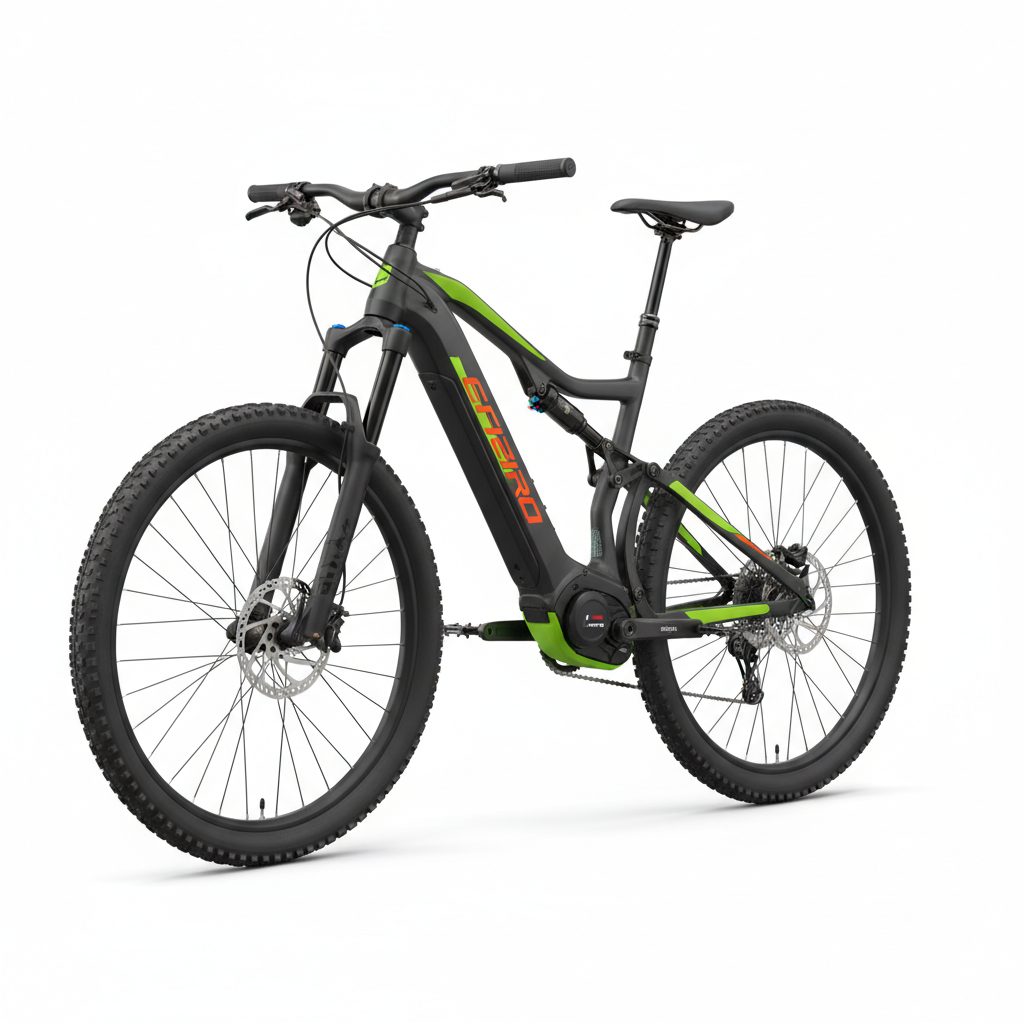
Mountain e-bikes need 500W+ motors, full suspension for serious trails, 27.5" or 29" wheels, hydraulic disc brakes, and robust frame geometry. Entry-level models start around £1,200, mid-range £2,000-£3,500, with premium options exceeding £4,000. The right choice depends on your terrain type, riding style, and budget—not necessarily the highest power rating.
What Makes a Mountain E-Bike Different?
Mountain e-bikes are purpose-built for off-road terrain, and that means every component is engineered to handle the demands of trail riding.
Regular e-bikes prioritize comfort and efficiency on paved surfaces. Mountain e-bikes, however, need to conquer loose gravel, steep inclines, rocky descents, and muddy paths. This requires a completely different approach to frame geometry, suspension systems, and power delivery. If you're considering different bike types for various riding conditions, our guide on fat tire e-bikes vs regular e-bikes explores similar terrain-specific considerations.
Trail Types & Required Features
🏞️ Cross-Country Trails
500-750W motor sufficient
Hardtail or 100-120mm travel
Lighter weight preferred (under 50 lbs)
Efficient pedaling geometry
700-1000Wh battery for range
⛰️ All-Mountain / Trail
750-1000W motor recommended
130-150mm front & rear travel
Balanced geometry
Dropper post essential
Robust braking system
🪨 Enduro / Aggressive
1000-2000W motor for climbs
150-180mm travel suspension
Slack head angle (65-67°)
Burly frame construction
Heavy-duty components throughout
Last year, I took a cross-country e-bike onto an aggressive enduro trail. The lesson was immediate and humbling—the 120mm travel suspension bottomed out on every rock garden, and the motor struggled on the steepest climbs. Matching your bike to your actual terrain isn't just about performance; it's about safety.
Motor Power: Finding the Sweet Spot
Motor power is often the first spec riders look at, but it's not just about the highest wattage number.
For mountain biking, you need power that's controllable, reliable, and appropriate for your terrain. A 500W motor might be perfect for moderate trails, while technical climbing demands 1000W or more. To understand the practical differences between motor power levels and what you actually need for mountain biking, see our comprehensive guide on e-bike motor power explained.
Mid-drive vs Hub motors: For mountain biking, mid-drive motors are generally superior. They provide better weight distribution, more natural pedaling feel, and superior climbing ability. Hub motors can work for lighter trail riding but struggle with technical terrain.
Suspension is where mountain e-bikes truly separate from their city cousins.
Suspension Types Explained
Hardtail
Front Suspension Only
100-120mm travel
Best For: Cross-country, smooth trails, budget-conscious riders
Advantages: Lighter, more efficient pedaling, lower maintenance, better value
Limitations: Less comfort on rough terrain, reduced traction on technical descents
Full Suspension
Front & Rear Suspension
130-180mm travel
Best For: Technical trails, aggressive riding, maximum comfort
Advantages: Superior traction, better control, more comfortable on rough terrain
Limitations: Heavier, more expensive, requires more maintenance
I initially bought a hardtail thinking I'd save money and weight. After six months of riding increasingly technical trails, I upgraded to full suspension. The difference in control and confidence on descents was worth every penny—and my back thanked me.
For riders new to mountain biking, start with a hardtail if you're mostly on groomed trails. If you're already tackling technical terrain or plan to progress quickly, invest in full suspension from the start.
Essential Components for Trail Riding
Must-Have Features Checklist
🔧
Hydraulic Disc Brakes
180mm rotors minimum (front), 160-180mm rear. Look for Shimano, SRAM, or Tektro systems. Cable disc brakes don't provide enough stopping power for aggressive mountain biking.
⚙️
Wide-Range Gearing
1x11 or 1x12 drivetrains are standard. Need 42T or larger cassette for steep climbs. Single chainring reduces weight and simplifies shifting.
🛞
Robust Wheel System
27.5" for maneuverability or 29" for rolling efficiency. 2.3"-2.6" tire width for traction. Double-wall rims rated for trail/enduro use.
📏
Dropper Seatpost
Remote-activated height adjustment. Essential for descents and technical sections. 125-150mm drop typical for trail bikes.
🔋
Integrated Battery
500-1000Wh capacity for extended rides. Integrated mounting protects from trail damage. Removable for charging convenience. For detailed guidance on battery selection and capacity requirements, check our e-bike battery buying guide.
🏗️
Durable Frame Material
Aluminum alloy (most common) or carbon fiber (premium). Look for hydroformed or butted tubing. Reinforced dropouts and bottom bracket area. For riders concerned about frame strength and weight capacity, our guide on e-bikes for heavy riders covers durability considerations in detail.
Don't overlook the importance of a proper dropper post. It seems like a luxury until you're descending a technical trail and realize you can't get your weight back far enough with a fixed seatpost. It's now one of the first upgrades I recommend to new riders.
Frame Geometry: Why It Matters
Frame geometry determines how your mountain e-bike handles on different terrain.
Key angles to understand:
Head Tube Angle: Steeper (69-71°) for climbing efficiency, slacker (65-67°) for descending stability
Seat Tube Angle: Steeper puts you in a better climbing position over the rear wheel
Bottom Bracket Height: Lower for stability, higher for obstacle clearance
Most modern trail e-bikes use a slack head angle (66-68°) combined with a steep seat angle (75-77°). This geometry climbs efficiently while remaining stable on descents—the best of both worlds. Getting the right frame size is crucial for proper geometry and handling—see our e-bike size chart guide to ensure you choose the correct frame dimensions for your height and riding style.
Budget Tiers: What to Expect at Each Price Point
Mountain E-Bike Price Categories
Entry Level
£1,200-£2,000
What You Get:
500-750W hub or entry mid-drive motor
Hardtail or basic full suspension
Mechanical disc brakes or entry hydraulic
400-500Wh battery capacity
Basic component specifications
Best For: Beginners, light trail riding, budget-conscious buyers
Mid-Range
£2,000-£3,500
What You Get:
750-1000W mid-drive motor
Quality full suspension (130-150mm)
Hydraulic disc brakes (Shimano/SRAM)
600-800Wh battery capacity
1x11 or 1x12 drivetrain
Dropper post included
Best For: Serious trail riders, regular mountain biking
Premium
£4,000+
What You Get:
1200-2000W premium mid-drive systems
High-end suspension (150-180mm travel)
Top-tier braking (4-piston calipers)
800-1000Wh battery capacity
Carbon fiber frame options
Premium components throughout
Best For: Advanced riders, aggressive terrain, maximum performance
For more budget guidance across all e-bike types, see our E-Bike Price Guide.
Top Mountain E-Bikes: Our Recommendations
Based on extensive testing and real-world performance, here are the mountain e-bikes that excel in their categories. Each model has been selected for specific riding styles and terrain types.
Coswheel 26 Inch Electric Mountain Bike
Motor: 1500W high-power mid-drive
Battery: 48V high-capacity lithium
Suspension: Full suspension front and rear
Wheels: 26" with wide trail tires
Brakes: Hydraulic disc brakes
Frame: Reinforced aluminum alloy
The Coswheel delivers serious power for aggressive mountain biking. The 1500W motor provides exceptional climbing capability, while the full suspension system handles technical descents with confidence. This bike excels on steep, challenging terrain where power and control are paramount.
The 26" wheels offer excellent maneuverability in tight switchbacks and technical sections. The full suspension setup absorbs impacts effectively, keeping you in control over rocks and roots. Ideal for riders who prioritize climbing power and technical capability over long-distance efficiency.
Strengths
Powerful 1500W motor conquers steep climbs easily
Full suspension provides excellent trail comfort
Nimble 26" wheels perfect for technical terrain
Hydraulic disc brakes offer reliable stopping power
Robust frame construction for durability
Limitations
Higher power may exceed regulations in some regions
26" wheels less efficient on smooth trails than 29"
The HX Q3 represents the pinnacle of power for electric mountain bikes. With 2000W of motor power, this bike is built for riders who regularly tackle the most demanding terrain—steep mountain ascents, loose gravel climbs, and technical enduro trails.
This isn't a bike for everyone. It's designed for experienced riders who need maximum power and can handle the responsibility that comes with it. The advanced suspension system and premium braking ensure you have the control to match the power.
Strengths
2000W motor provides exceptional climbing capability
The Accolmile offers versatility through adjustable power settings, making it suitable for various trail conditions and local regulations. The ability to switch between 750W and 1200W means you can optimize for efficiency on easier trails or unleash full power when needed.
This bike strikes a balance between capability and compliance. In areas with strict e-bike regulations, run it in 750W mode. When you're on private land or less restrictive areas, the 1200W setting tackles serious climbs. The front suspension provides adequate comfort for most trail riding without the weight penalty of full suspension.
Strengths
Adjustable power adapts to regulations and terrain
Multiple wheel size options for different preferences
Lighter weight than full suspension alternatives
Removable battery simplifies charging
Good value for versatile performance
Limitations
Hardtail design less comfortable on rough terrain
Front suspension only limits technical capability
Power adjustment requires stopping to change settings
The soft-tail design offers a middle ground between hardtail efficiency and full suspension comfort. The 27.5" wheels provide an excellent balance of rolling speed and maneuverability, making this bike versatile across various trail types.
This bike works well for riders transitioning from hardtails who want more comfort without the complexity and weight of full suspension. The soft-tail rear provides noticeable bump absorption while maintaining efficient pedaling characteristics. It's an excellent choice for varied terrain where you encounter both smooth sections and rougher trails.
Strengths
Soft-tail adds comfort without full suspension weight
This unique mountain e-bike combines trail capability with folding convenience. The 20" fat tires provide surprising traction and stability despite the smaller wheel size, while the folding frame allows for easy transport and storage.
Perfect for RV travelers, apartment dwellers, or riders who need to transport their bike regularly. While not suited for extreme terrain, it handles moderate trails confidently. The fat tires compensate for the smaller wheel diameter, rolling over obstacles effectively. I've seen riders take these on camping trips, folding them for transport and then tackling local trails at their destination. For more details on folding mountain bike options, see our folding e-bikes buying guide.
You might also consider Fat Tire E-Bikes which offer excellent traction and stability for off-road adventures, or browse our complete E-Bike Shop for all available options.
Comparing to Competitors: How These Stack Up
It's important to understand how mountain e-bikes compare to leading brands worldwide.
Premium brands like Trek, Specialized, and Giant offer mountain e-bikes starting around £3,500 and often exceeding £7,000. They provide established warranty networks, extensive dealer support, and refined geometries developed through years of testing.
What you gain with direct-to-consumer options: Significant cost savings (often 30-50% less), competitive specifications, and direct customer support. The trade-off is fewer local service options and less extensive testing pedigree.
Value brands like Rad Power Bikes and Lectric offer mountain-style e-bikes in similar price ranges but may compromise on suspension quality, component specifications, or motor refinement.
For most riders, the bikes we've featured offer excellent value—especially if you're willing to handle basic maintenance yourself or have a local bike shop for service. If you want the reassurance of an established dealer network and don't mind paying premium prices, traditional brands remain strong options.
Pro Tips From the Trails
Insider Knowledge for Mountain E-Bike Buyers
Test ride with a full battery: Motor characteristics change as battery depletes. A bike that feels powerful at 100% might struggle at 30%. Test at various charge levels if possible.
Check motor placement impacts: Mid-drive motors affect pedaling feel and weight distribution differently than hub motors. Test both styles on actual trails, not just parking lots.
Suspension setup is crucial: Improperly set suspension negates its benefits. Learn to adjust air pressure and rebound for your weight and riding style—don't ride with factory settings.
Battery placement affects handling: Frame-integrated batteries lower center of gravity (better). Rack-mounted batteries raise it (worse for technical riding). Tube-mounted is the sweet spot.
Investigate parts availability: Some proprietary components are difficult to replace. Check if the bike uses standard parts (Shimano, SRAM) or custom components before buying.
Factor in upgrade costs: Entry-level components will need replacement sooner. Budget £200-£400 annually for normal wear items (tires, brake pads, chain, cassette).
Here's something I learned the hard way: don't assume the bike is perfectly set up from the factory. I rode for three months with suspension at the wrong pressure, wondering why everyone else seemed to handle rough terrain better. After a proper setup session, the bike transformed. Take time to learn proper suspension adjustment—it's as important as choosing the right bike.
Maintenance Considerations
Mountain e-bikes require more maintenance than city bikes due to trail conditions and component stress.
Regular maintenance tasks:
After every ride: Clean mud and debris, check tire pressure, inspect brake pads
Weekly (regular riders): Clean and lube chain, check derailleur adjustment, inspect suspension for leaks
Monthly: Torque check all bolts, deep clean drivetrain, inspect frame for cracks
Budget for maintenance. A well-maintained mountain e-bike lasts years longer and performs better throughout its life. Neglecting maintenance leads to expensive repairs and diminished trail performance.
Legal and Safety Considerations
Understanding e-bike regulations is essential, as they vary significantly by location.
General power limits by region:
United States: Class 1 (750W) for most public trails, higher power often restricted to private land
United Kingdom: 250W limit for legal road use, higher power bikes classified as motorcycles
European Union: 250W limit, speed limited to 25 km/h with pedal assist
Canada: Provincial regulations vary, typically 500W maximum
Australia: 250W limit, 25 km/h speed restriction
The bikes we've featured with 750W+ motors may be restricted in certain regions. Always verify local regulations before purchasing. Some riders use powerful bikes exclusively on private property to avoid regulatory issues.
Full-face or at minimum a quality mountain bike helmet (MIPS technology preferred)
Knee and elbow pads for technical riding
Gloves for grip and protection
Eye protection (clear or tinted depending on conditions)
Appropriate footwear with good traction
Making Your Decision: Key Questions to Ask
Before finalizing your purchase, answer these critical questions:
What's your primary terrain type? Be honest about the trails you'll actually ride most often, not the most extreme trails you might hit occasionally. Your bike should excel at your common rides.
What's your realistic budget including accessories? Remember to budget for helmet, protective gear, maintenance tools, and spare parts. Add 15-20% to your bike budget for essential accessories.
Do you have local service options? If you're not mechanically inclined, ensure you have access to a bike shop that will work on e-bikes. Not all shops service electric bikes.
What's your experience level? Be realistic. If you're new to mountain biking, starting with an entry-level bike lets you learn without a massive investment. You'll know what features matter to you before upgrading.
Will you trailer/transport the bike? Heavy bikes require proper racks. Consider weight if you'll be loading and unloading frequently.
Download Your Mountain E-Bike Selection Guide
Free PDF Resource: Mountain E-Bike Decision Matrix
Get our comprehensive comparison chart with detailed specifications, terrain suitability ratings, and budget planning worksheet. Perfect for comparing multiple bikes side-by-side.
Choosing the right mountain e-bike comes down to matching the bike's capabilities to your actual riding needs.
Don't get seduced by maximum power ratings or premium features you won't use. A well-chosen mid-range bike that fits your riding style outperforms an expensive bike with features you don't need.
Start with the terrain you ride most often. Match motor power, suspension, and components to those demands. Factor in your budget realistically, remembering that accessories and maintenance are ongoing costs.
Most importantly, if possible, test ride before buying. A bike that looks perfect on paper might not feel right when you're actually on the trail. Trust your experience on the bike more than specifications on a screen.
The right mountain e-bike opens up trails that were previously too demanding and extends your range into new terrain. It's an investment in adventure—choose wisely, maintain it well, and it will provide years of trail riding enjoyment.
Val is an e-bike specialist with over 10 years of experience riding, maintaining, and testing electric bicycles. At Glide Ebike, Val creates maintenance guides and content based on a decade of hands-on work with e-bike systems, having personally serviced and ridden dozens of different models.
With over 25,000 miles logged across various terrains and conditions, Val's recommendations come from real-world experience with what works—and what doesn't—in everyday e-bike ownership.