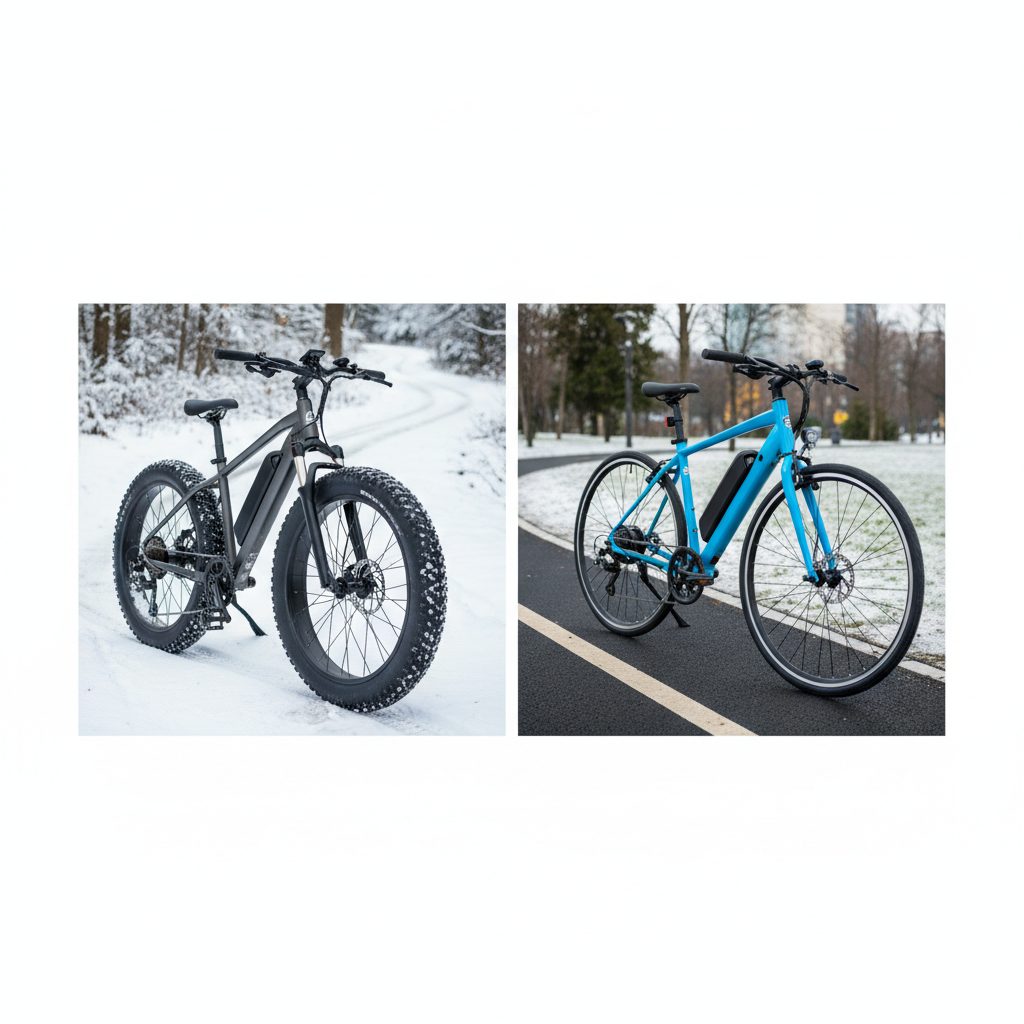
Last winter, I watched a rider glide effortlessly across a snow-covered bike path on what looked like a small tank with pedals. Meanwhile, my regular e-bike sat at home, waiting for clearer conditions.
That moment sparked my deep dive into fat tire e-bikes. Over the past year, I've tested both types extensively across different terrains and weather conditions.
If you're deciding between a fat tire e-bike and a regular e-bike, you're making a choice that will affect every ride for years to come. This guide breaks down the real differences to help you choose the right one.
Before we dive into the specifics, check out our complete e-bike buying guide for a comprehensive overview of choosing the perfect electric bike.
Key Takeaways
- Fat tire e-bikes excel on soft, loose, or slippery terrain but trade speed and efficiency for stability
- Regular e-bikes are faster and more efficient on paved surfaces with better range and handling
- Fat tires cost more upfront and have higher maintenance expenses for tire replacements
- Your riding environment matters most - urban commuters typically prefer regular e-bikes while off-road and winter riders benefit from fat tires
- Weight differences are significant with fat tire models typically 10-15 pounds heavier
- Both types offer quality options across various price ranges from entry-level to premium
What Are Fat Tire E-Bikes?
Fat tire e-bikes feature oversized tires, typically 3.8 to 5 inches wide, compared to the standard 1.5 to 2.5 inches on regular e-bikes.
These massive tires run at lower air pressure (5-15 PSI versus 40-65 PSI), creating a larger contact patch with the ground. This design transforms how the bike interacts with soft or unstable surfaces.
Originally developed for riding on snow and sand, fat tire bikes gained popularity in Alaska and other challenging climates before electric motors made them accessible to a broader audience.
Fat Tire vs Regular E-Bikes: Quick Comparison
| Feature |
Fat Tire E-Bikes |
Regular E-Bikes |
| Tire Width |
3.8" - 5.0" |
1.5" - 2.5" |
| Tire Pressure |
5-15 PSI |
40-65 PSI |
| Weight |
65-80 lbs |
45-60 lbs |
| Best Terrain |
Snow, sand, mud, trails |
Paved roads, light trails |
| Top Speed |
20-28 mph |
20-28 mph |
| Range |
25-40 miles |
30-60 miles |
| Price Range |
$1,200 - $5,000 |
$800 - $4,500 |
| Maintenance Cost |
Higher (expensive tires) |
Lower (standard tires) |
| Comfort on Bumps |
Excellent natural cushioning |
Good with suspension |
| Storage Space |
Requires more room |
Compact options available |
Key Differences That Matter
Beyond the obvious tire size, these bikes differ in ways that affect your daily riding experience.
Traction and Stability
Fat tires provide exceptional grip on loose surfaces. The wide contact patch distributes weight across a larger area, preventing sinking into sand or snow.
Regular e-bikes can struggle on anything beyond packed dirt. I learned this the hard way during a beach ride attempt that ended with my city e-bike stuck in the sand.
Speed and Efficiency
Regular e-bikes win decisively on pavement. The narrower tires create less rolling resistance, meaning better battery efficiency and higher sustainable speeds.
Fat tire bikes feel sluggish on smooth surfaces. The wide tires and additional weight require more energy to maintain speed, reducing your range by 20-30% compared to regular e-bikes on similar routes. Understanding battery capacity and how it affects your range becomes especially important when choosing between these two types.
Comfort and Suspension
Fat tires act as natural shock absorbers. Running at low pressure, they compress over bumps and rough terrain, smoothing out the ride without dedicated suspension.
This doesn't mean regular e-bikes are uncomfortable. Quality models include front or full suspension that handles rough roads effectively, though you'll feel impacts more directly than on fat tires.
When to Choose Each Type
Best Use Cases
Choose Fat Tire E-Bikes For:
- Winter riding in snow and ice
- Beach cruising and sand riding
- Off-road trails and mountain paths
- Muddy or loose terrain
- Year-round riding in variable conditions
- Maximum comfort without suspension
- Hunting, fishing, and outdoor recreation access
Choose Regular E-Bikes For:
- Daily urban commuting
- Paved road riding and bike paths
- Longer distance travel
- Maximum range and efficiency
- Easy storage and portability
- Speed-focused riding
- Lower overall ownership costs
Your primary riding environment should drive this decision. If you're mostly on pavement with occasional light trails, a regular e-bike makes more sense. If you face challenging terrain regularly or ride in winter conditions, fat tires justify their tradeoffs. For those focused on daily travel to work, our guide to the best commuter e-bikes explains which features matter most for urban riding.
Real-World Performance Comparison
Range and Battery Life
Fat tire e-bikes consume more battery due to increased rolling resistance and weight. Expect 25-40 miles per charge on mixed terrain.
Regular e-bikes achieve 30-60 miles on similar battery capacities, with efficient models reaching even higher ranges on flat terrain.
Handling and Maneuverability
Regular e-bikes feel nimble and responsive, especially in urban environments with frequent turns and traffic navigation.
Fat tire bikes require more effort to turn and don't corner as sharply. The wide stance adds stability but reduces agility.
Weight and Portability
Most fat tire e-bikes weigh 65-80 pounds, making them challenging to lift, carry, or load onto vehicle racks.
Regular e-bikes typically range from 45-60 pounds, with some lightweight models under 40 pounds. This matters for storage and transportation.
Fat Tire E-Bikes: Complete Pros and Cons
Fat Tire E-Bikes
Strengths
- Unmatched traction on loose, soft, or slippery surfaces
- Natural suspension effect from low-pressure tires
- Year-round capability including winter riding
- Enhanced stability for new or cautious riders
- Beach, snow, and off-road access
- Often don't need separate suspension systems
- Better weight distribution for cargo carrying
Limitations
- Significantly higher rolling resistance on pavement
- Reduced battery range compared to regular e-bikes
- Heavier overall weight (10-15 lbs more)
- Less agile handling and slower acceleration
- Expensive tire replacements ($80-150 each)
- Requires more storage space
- Generally higher upfront costs
- Fewer folding models available
Regular E-Bikes
Strengths
- Superior efficiency and longer range per charge
- Faster acceleration and higher sustained speeds
- Lighter weight for easier handling and transport
- More responsive steering and cornering
- Lower maintenance costs
- Wider variety of styles and designs
- Better for daily commuting and fitness riding
- Many compact and folding options
Limitations
- Limited capability on snow, sand, or mud
- Less comfortable on rough terrain without suspension
- Reduced stability on loose surfaces
- May need dedicated suspension for comfort
- Not ideal for winter or off-road use
- More susceptible to punctures on rough terrain
- Less natural cushioning from tires
Making Your Decision
Decision Guide
Step 1: Identify Your Primary Terrain
Where will you ride 80% of the time? If it's paved roads, bike paths, or maintained trails, lean toward regular e-bikes. If it's snow, sand, mud, or rough off-road, consider fat tires.
↓
Step 2: Consider Your Climate
Do you face snow for 3+ months yearly? Fat tires justify their cost. Mild winters with occasional rain? Regular e-bikes handle this fine.
↓
Step 3: Evaluate Storage and Transport
Limited storage space or need to carry your bike upstairs? Regular e-bikes (especially folding models) are more practical. For detailed guidance on portable options, check our folding e-bikes buying guide.
↓
Step 4: Factor in Your Budget
Consider both purchase price and ongoing costs. Fat tire replacement and maintenance add up over time. Our detailed e-bike price guide breaks down what to expect at every budget level.
↓
Step 5: Test Ride Both Types
Nothing replaces actual riding experience. The right choice will feel obvious once you've ridden both in your typical conditions.
Total Cost of Ownership
Looking beyond the sticker price reveals important differences in long-term expenses.
Typical 5-Year Ownership Costs
Fat Tire E-Bike
$3,500 - $6,500
Including: $2,000-4,000 purchase, $800-1,200 tire replacements, $700-1,300 maintenance
Regular E-Bike
$2,500 - $5,000
Including: $1,500-3,500 purchase, $300-600 tire replacements, $700-900 maintenance
Fat tire replacement costs range from $80-150 per tire compared to $30-60 for regular tires. You'll typically replace tires every 1,000-2,000 miles depending on terrain and riding style.
Best Fat Tire E-Bikes From Our Collection
We've curated our top fat tire models across different use cases and budgets. These bikes deliver proven performance in real-world conditions. The motor power significantly impacts performance - to understand the differences between motor options, see our guide to e-bike motor power.
XDC600 Fat Tire Electric Bike
- Motor: 750W high-power hub motor
- Tire Size: 20" x 4.0" fat tires
- Battery: 48V high-capacity system
- Range: 35-45 miles per charge
- Frame: Foldable aluminum alloy
- Max Speed: 28 mph
- Weight Capacity: 330 lbs
This folding fat tire beast combines portability with serious off-road capability. The compact 20-inch wheels maintain excellent ground clearance while allowing the bike to fold for storage or transport.
Perfect for riders who need fat tire capability but face storage limitations. The powerful 750W motor handles steep inclines and challenging terrain without strain.
Strengths
- Folds for easy storage and transport
- Powerful 750W motor for hills
- High weight capacity
- Excellent value for features
Considerations
- Smaller wheels reduce top speed
- Heavier than standard folders
- Assembly required
View Details
EKX-T1 Electric Bike 1000W Fat Tire
- Motor: 1000W powerful hub motor
- Tire Size: Premium 4.0" fat tires
- Battery: 48V long-range system
- Range: 40-50 miles per charge
- Suspension: Front fork suspension
- Max Speed: 28 mph
- Display: LCD multi-function display
The EKX-T1 represents serious off-road performance with its 1000W motor delivering exceptional power for steep climbs and rough terrain. This bike doesn't compromise on capability.
Ideal for riders tackling challenging trails, winter conditions, or needing maximum power for cargo hauling. The front suspension works with the fat tires to smooth out even the roughest paths.
Strengths
- Powerful 1000W motor for serious terrain
- Impressive range capabilities
- Quality front suspension system
- Robust construction
Considerations
- Higher price point
- Heavy weight limits portability
- Overkill for casual riding
View Details
2000W Fat Tire Electric Dirt Bike 52V
- Motor: 2000W extreme power motor
- Tire Size: Aggressive fat tire tread
- Battery: 52V high-voltage system
- Range: 30-40 miles (varies with riding mode)
- Suspension: Full dual suspension
- Max Speed: 35+ mph
- Brakes: Hydraulic disc brakes
This is the ultimate fat tire machine for riders who demand maximum performance. The 2000W motor and 52V system deliver motorcycle-level acceleration and hill-climbing power.
Best suited for experienced riders tackling extreme terrain, long off-road adventures, or those who want absolutely no limits on power. This bike can handle anything you throw at it.
Strengths
- Incredible power and acceleration
- Full suspension for maximum comfort
- Handles extreme terrain easily
- Premium hydraulic brakes
Considerations
- Premium pricing
- May exceed legal limits in some areas
- Requires experienced rider
- Heavy battery consumption
View Details
Fat Tire Electric Bike Adults
- Motor: 500W efficient hub motor
- Tire Size: 4.0" all-terrain fat tires
- Battery: 48V standard capacity
- Range: 25-35 miles per charge
- Frame: Durable steel construction
- Max Speed: 20 mph
- Brakes: Mechanical disc brakes
An excellent entry point into fat tire e-biking without breaking the bank. This model offers solid fat tire capability at an accessible price point.
Perfect for riders exploring fat tire benefits for the first time, weekend trail riders, or those on a budget who still want genuine all-terrain capability.
Strengths
- Budget-friendly entry point
- Solid construction quality
- True fat tire capability
- Reliable mechanical brakes
Considerations
- Lower speed limit (20 mph)
- Basic feature set
- Shorter range than premium models
- No suspension system
View Details
Best Regular E-Bikes From Our Collection
Our regular e-bike selection covers urban commuting, recreational riding, and everything in between. These models excel on paved surfaces and maintained trails.
ENGWE E26 ST Electric Hybrid Bike
- Motor: 250W efficient mid-drive
- Tire Size: 26" standard hybrid tires
- Battery: 36V integrated system
- Range: 45-60 miles per charge
- Frame: Step-through aluminum design
- Max Speed: 15.5 mph (EU compliant)
- Weight: 55 lbs
The E26 ST combines urban practicality with impressive range. Its step-through frame makes mounting and dismounting effortless, perfect for city commuting with frequent stops.
Excellent choice for daily commuters, older riders, or anyone prioritizing easy bike access. The integrated battery maintains clean aesthetics while the mid-drive motor provides smooth, natural power delivery.
Strengths
- Exceptional range for commuting
- Easy step-through access
- Lightweight for an e-bike
- Efficient mid-drive motor
Considerations
- Lower top speed (EU compliant)
- Not suitable for steep hills
- Limited off-road capability
View Details
ENGWE T14 Foldable E-Bike 350W/250W
- Motor: 350W/250W (selectable)
- Tire Size: 14" compact wheels
- Battery: 48V removable system
- Range: 35-50 miles per charge
- Frame: Quick-fold aluminum
- Folded Size: Ultra-compact
- Weight: 48 lbs
This compact folder solves the storage challenge beautifully. It folds in seconds to fit under desks, in car trunks, or on public transit.
Ideal for multi-modal commuters, apartment dwellers with limited storage, or riders who need to transport their e-bike regularly. The dual motor settings accommodate different legal requirements across regions.
Strengths
- Ultra-compact folded dimensions
- Lightweight and portable
- Good range despite small size
- Dual motor power settings
Considerations
- Small wheels affect comfort on rough roads
- Lower weight capacity than full-size bikes
- Not ideal for tall riders
View Details
27.5 Inch Electric Mountain Bike 48V Soft Tail
- Motor: 750W powerful mid-drive
- Tire Size: 27.5" x 2.35" trail tires
- Battery: 48V high-capacity system
- Range: 40-55 miles per charge
- Suspension: Soft tail rear suspension
- Max Speed: 28 mph
- Gears: 21-speed Shimano
This mountain e-bike brings serious trail capability without fat tire weight penalties. The soft tail suspension provides excellent comfort on rough terrain while maintaining efficient pedaling. For comprehensive guidance on trail-ready features, explore our mountain e-bikes buying guide.
Perfect for trail enthusiasts who want e-assist power on climbs but prefer the nimble handling of standard mountain bike tires. The 750W motor tackles steep technical climbs with ease.
Strengths
- Excellent trail performance
- Soft tail suspension comfort
- Quality Shimano drivetrain
- Good range for mountain riding
Considerations
- Not suitable for snow or sand
- Higher price than basic models
- Requires basic mountain bike skills
View Details
Koolux BK5S Step-Through E-Bike 250W
- Motor: 250W rear hub motor
- Tire Size: 26" comfort tires
- Battery: 36V standard capacity
- Range: 35-50 miles per charge
- Frame: Low step-through design
- Max Speed: 15.5 mph
- Features: Integrated lights, rear rack
A practical commuter focused on comfort and convenience. The ultra-low step-through frame accommodates riders wearing dresses, skirts, or anyone who values easy mounting.
Best for urban commuters, casual riders, or those who prioritize comfort over speed. The integrated lights and rear rack handle daily commuting needs out of the box.
Strengths
- Very easy step-through access
- Comfortable upright riding position
- Integrated practical features
- Excellent value for commuting
Considerations
- Limited speed (15.5 mph)
- Basic feature set
- Not suitable for hills or trails
View Details
Maintenance and Long-Term Care
Tire maintenance represents the biggest difference between these bike types.
Fat Tire Maintenance
Check tire pressure before every ride. Running pressure too high defeats the fat tire benefits while running too low risks pinch flats and rim damage.
Expect to replace fat tires every 1,000-2,000 miles depending on terrain. Quality fat tires cost $80-150 each, and you'll need to find a shop with proper equipment to mount them.
The tires themselves are more puncture-resistant due to lower pressure and larger volume, but when they do fail, you're carrying a heavy spare or dealing with a long walk home.
Regular E-Bike Maintenance
Standard tires are simpler and cheaper to maintain. Replacement costs range from $30-60 per tire, and any bike shop can handle the work.
You'll change tires more frequently (every 1,000-1,500 miles typically) but the lower cost and easier availability balance this out.
If your regular e-bike has suspension, that adds maintenance requirements that fat tire bikes avoid. Suspension forks need annual service, adding $50-100 to yearly costs.
For comprehensive guidance on keeping your e-bike in top condition, check our detailed e-bike maintenance checklist.
Common Misconceptions Debunked
"Fat Tire E-Bikes Are Better for All Riders"
This myth stems from fat tires' obvious stability advantage. But that stability comes with significant tradeoffs in weight, efficiency, and speed.
For most urban riders, the extra stability isn't worth the reduced range and sluggish pavement performance. Regular e-bikes provide plenty of stability for typical riding conditions.
"You Can Use Fat Tire E-Bikes for Everything"
While fat tire bikes can technically ride anywhere, they're genuinely suboptimal on pavement. The efficiency penalty isn't trivial – expect 20-30% less range on identical routes compared to regular e-bikes.
If you're riding 80% on pavement and 20% off-road, a regular e-bike with quality tires handles that mix better than a fat tire bike.
"Regular E-Bikes Can't Handle Any Off-Road"
Quality regular e-bikes with appropriate tires (2.1-2.5 inches wide) handle packed dirt trails, gravel roads, and light off-road use without issues.
They struggle on loose sand, deep snow, or very muddy trails. But for most recreational trail riding, standard tires with decent tread work fine.
Free Download: Fat Tire vs Regular E-Bike Comparison Guide
Get our comprehensive PDF comparison chart featuring:
- Side-by-side specifications comparison
- Terrain suitability matrix
- Total cost of ownership calculator
- Maintenance schedule for both types
- Decision-making worksheet
Download Free Comparison Guide
Note: This is a placeholder link. The actual PDF will be hosted on your server after creation.
Final Recommendations
The right choice depends entirely on your specific riding context. Here's my recommendation framework based on testing both types extensively:
Choose a Fat Tire E-Bike If:
- You ride regularly in snow or icy conditions (3+ months per year)
- Beach riding is a primary use case
- You tackle genuine off-road trails with loose, soft, or muddy terrain
- Maximum comfort matters more than efficiency
- You're willing to accept lower range and higher costs for terrain capability
- Storage space and portability aren't concerns
Choose a Regular E-Bike If:
- Most riding happens on paved roads or maintained trails
- Range and efficiency are priorities
- You need to carry or store your bike regularly
- Speed and nimble handling matter for your riding style
- Lower long-term costs are important
- You ride primarily in fair weather conditions
Still Unsure? Consider These Questions:
Take a moment to honestly answer these questions:
- What surface will you ride on for 80% of your trips?
- How many months per year does snow or mud limit riding options?
- Do you need to carry your bike up stairs or load it into vehicles?
- Is your typical ride under 20 miles or over 30 miles?
- Do you value top speed over maximum stability?
Your answers should point you clearly toward one type or the other. When in doubt, test ride both types in conditions matching your typical use. The right choice becomes obvious once you experience the real-world differences.
Continue Your E-Bike Research
These related guides will help you make the most informed decision:
Making Your Choice
Both fat tire and regular e-bikes offer compelling benefits for different riders and conditions. Neither is universally "better" – they're optimized for different priorities.
Fat tire e-bikes excel when terrain, weather, or stability demands justify their weight and efficiency penalties. Regular e-bikes deliver superior performance for the majority of riders who stick primarily to paved surfaces.
Consider where you'll actually ride, not where you imagine riding. Most people overestimate how much challenging terrain they'll encounter and underestimate how much the weight and efficiency differences matter on daily rides.
Whatever you choose, you're getting into one of the most practical and enjoyable forms of transportation available. The real joy comes from riding, not from having the "perfect" bike on paper.
Need more guidance? Our complete e-bike buying guide covers everything from motors to batteries to help you make the right choice for your specific needs.